Snow Guards in North Idaho Explained: What They Are, When You Need Them, and What to Ask Your Roofer
In This Guide
- ›Snow guards are small brackets, bars, or fences that hold snow on a roof so it melts in place instead of sliding off in one dangerous sheet.
- ›North Idaho's 40–60 psf ground snow loads put us right at the practical limit for cheap plastic pad-style guards — most homes here need an engineered bar or fence system, not a box of glue-on pads.
- ›There are three real types (pad, bar, and fence) and the right one depends on your roof type, panel profile, and snow load — not on what the local hardware store stocks.
- ›You don't need snow guards over the entire roof — but you do need them above every doorway, walkway, driveway, and landscape feature you don't want buried.
- ›Pad-style snow guards run $8–$16 per linear foot installed; bar systems run $12–$40. Most North Idaho homes land in the $1,000–$4,000 range.
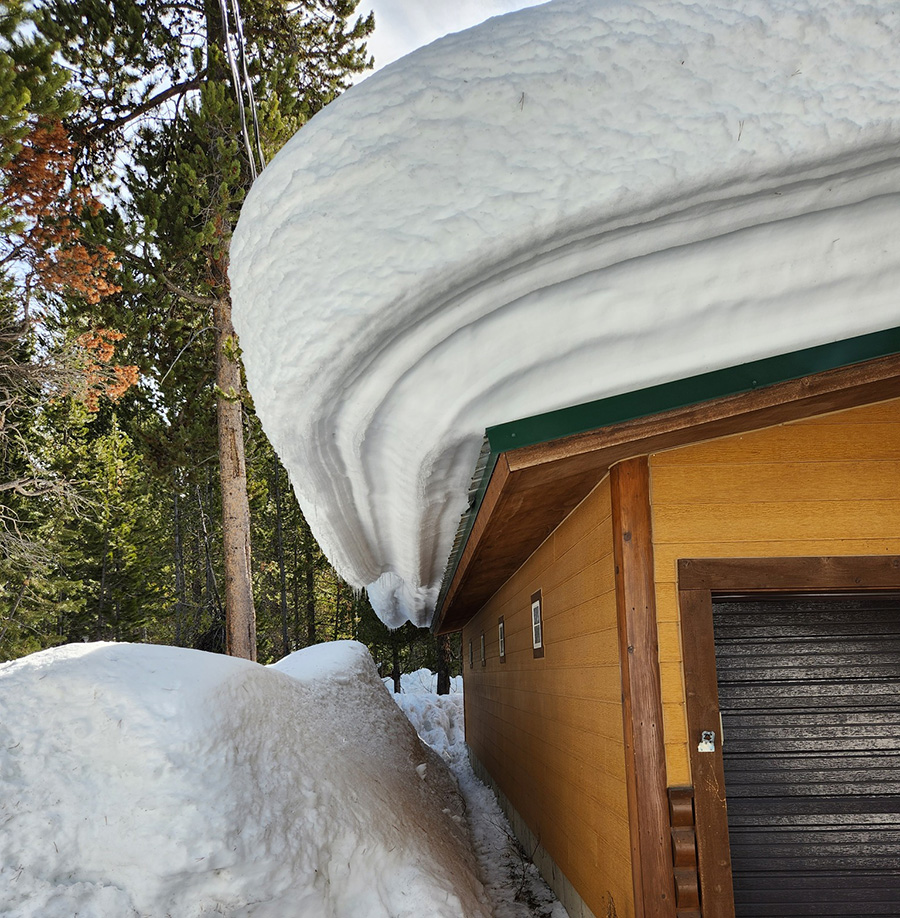
If you have a metal roof in North Idaho — or you're thinking about getting one — snow guards are the most overlooked piece of the system. They are small, often invisible from the street, and easy to skip. They are also the difference between a metal roof that performs beautifully for fifty years and a metal roof that buries your front walk in four hundred pounds of snow the first February you live under it. This guide explains what they are, how they work, and how to think about whether you need them.
This is one of those pieces of the roof that is much easier to get right at install than to retrofit later — which is why it is worth understanding now, before you sign a metal roof contract or watch your neighbor's snowpack crash into a parked truck.
What Snow Guards Actually Do
A snow guard is any device attached to a roof that holds snow on the surface so it can melt gradually instead of sliding off all at once. The term covers a wide range of products — small plastic pads, individual metal cleats, continuous horizontal bars, and multi-pipe fence systems — but they all do the same thing: stop the sudden release of snow.
The Metal Construction Association (MCA), the trade group that sets industry standards for metal roofing, defines a snow retention system as a series of devices installed "for the purpose of retaining snow on a roof and allow[ing] the snow to evacuate slowly via thaw and sublimation rather than suddenly and unexpectedly via rooftop avalanche." That second word — avalanche — is not hyperbole. A few hundred pounds of snow releasing off a slick metal surface can bury a walkway, snap a shrub, peel a gutter off a fascia, or knock a person down.
Snow guards are most relevant on metal roofs because metal is smooth, slick, and sheds snow aggressively. Asphalt shingle roofs have enough texture and friction that snow tends to hold and melt in place. Standing seam and exposed fastener metal roofs do not — and that is why every North Idaho metal roof needs some form of snow retention, even if it is a small one.
Why North Idaho Is Right at the Limit
Snow guards are rated by ground snow load — the pounds per square foot of snow a system is engineered to retain. North Idaho sits in a snow load zone that pushes the practical limits of cheap pad-style guards:
- Kootenai County design ground snow load: 40–60 psf, with higher elevations toward Spirit Lake and the Selkirks going higher. We covered the specifics in our snow load guide.
- Post Falls: 56 psf ground snow load, 40 psf roof design load per city code.
- Bonner County and mountain subdivisions: 60–150+ psf depending on elevation, with Schweitzer-area neighborhoods reaching 200+ psf.
The practical ceiling for most pad-style snow guards is 45 psf ground snow load — the limit at which manufacturers like SnoBlox-Snojax stop recommending them. That puts a lot of North Idaho homes — especially in Post Falls, Rathdrum, and most of Bonner County — right at or above the threshold where pad guards become an inadequate answer. For those homes, a continuous bar or fence system engineered to the specific roof is the correct choice.
This is also a place where North Idaho's freeze-thaw cycling matters. Snow that slides off and refreezes in your walkway creates a real injury hazard. The MCA's "Metal Roof Design for Cold Climates" bulletin recommends that "building entrances should be beneath gables, not eaves" for exactly this reason — and where eaves overhang a door or walkway, snow retention is the engineered solution.
The Three Types of Snow Guard
Not all snow guards are the same. There are three broad categories, and they have very different cost, performance, and installation characteristics:
1 · Pad-Style (Unitized) Snow Guards
Small individual pads or cleats installed in a staggered pattern across the roof surface. They rely on the bridging strength of the snowpack to span between adjacent pads — meaning the snow itself holds back the snow. Polycarbonate plastic and cast aluminum are the most common materials. Pad-style guards are the least expensive option (typically $8–$16 per linear foot installed) and are appropriate for light to moderate snow loads and shorter roof runs. The MCA recommends them only in lower-snow environments, and most manufacturers cap their use at 45 psf ground snow load — which is below what many North Idaho homes face.
2 · Bar / Rail-Style (Continuous) Snow Guards
Continuous horizontal bars or pipes that span the entire roof slope, anchored to the panel seams (on standing seam) or to brackets mounted through the panels (on exposed-fastener metal). Unlike pads, a bar system does not rely on the snowpack to bridge — the bar itself spans the load. This makes bar systems far stronger and appropriate for any North Idaho snow load. They cost more per linear foot (typically $12–$40 installed) but typically need only one or two rows near the eave, so the total project cost is often comparable to a full pad-style layout. Brands like S-5! ColorGard and DualGard are industry standards.
3 · Fence-Style Snow Guards
Two or more parallel bars or pipes stacked vertically — essentially a heavy-duty version of the bar system. Fence systems are engineered for the highest snow loads (mountain subdivisions, commercial buildings) and the longest roof runs. They are overkill for most North Idaho homes but are the right call for properties at elevation — Schweitzer area, Selkirk foothills, anywhere the ground snow load exceeds 100 psf.
A note on attachment: on a standing seam metal roof, snow guards must be clamped to the seam, not screwed through the panel. Penetrating fasteners on standing seam void the roof warranty and create leak paths that will fail. On an exposed-fastener panel (the kind with visible screws), pad and bar guards are mounted through the panel into the decking or purlins below using compatible fasteners and gaskets. Your roofer should know which applies to your roof — if they don't, that's a red flag.
Do You Actually Need Snow Guards?
Not every metal roof needs every type of snow guard. The decision comes down to three questions:
What is below the eave?
The MCA is clear on this: snow retention should protect the entire eave line, not just isolated spots. That said, the priority is anything a sudden snow slide could damage or hurt:
- Entryways and front porches — anywhere people walk.
- Driveways, parking areas, and sidewalks.
- Low-voltage landscaping — shrubs, decorative fences, AC condensers, gas meters.
- Gutters — an unprotected metal roof can rip a gutter off the fascia when several hundred pounds of snow releases at once.
- Lower roof sections — snow sliding off an upper roof onto a lower one can damage the lower roof's shingles or flashing.
What is your roof pitch?
Steeper pitches shed snow faster — and the slides are heavier. Above a 6/12 pitch, snow guards become much more important. Below a 3/12 pitch, snow tends to stay put under its own weight and guards are often unnecessary.
What is your snow load?
The decisive number. Below about 45 psf ground snow load, a properly laid out pad-style system will work. Above 45 psf — which is most of Kootenai County's higher elevations and all of Bonner County — bar or fence systems engineered for the load are the only responsible answer.
If you have a metal roof and you do not have snow guards anywhere on it, you are choosing — perhaps unintentionally — to accept the risk of a sudden snow slide off the eaves. That risk is real. It is also the kind of thing that does not happen for two or three winters, then happens on the warmest afternoon of February right after your kid walks out the front door.
Common Mistakes to Avoid
A few errors we see regularly on North Idaho metal roofs:
- Isolated placement over a single doorway. Putting one row of guards above the front door but not over the rest of the eave concentrates the slide force in the unprotected sections. Snow finds the gap and crashes off where you didn't protect. The MCA bulletin calls this "potentially a dangerous practice." Protect the whole eave or protect nothing — half-measures fail.
- Cheap plastic pads glued with construction adhesive. Adhesive-only mounts fail in our freeze-thaw climate within a few years. If you want pads, they should be mechanical-fastened through the panel into structure, not glued.
- Screwing snow guards through a standing seam panel. This voids the panel finish warranty and creates leak points. Use seam clamps on standing seam — period.
- Mismatched metals. Steel fasteners on aluminum panels cause galvanic corrosion that eats through the metal within a few years. Snow guards and fasteners should be metallurgically compatible with the roof panel itself.
- Skipping snow guards to save $1,500. A failed snow slide off a metal roof can take out a gutter ($1,500+), a section of landscaping ($500+), or send a person to the emergency room. The guard system is cheap insurance.
What to Ask Your Roofer About Snow Guards
If you are getting a metal roof, here are the questions to ask before signing a contract:
- What snow load is this system rated for? Look for an explicit number in pounds per square foot (psf). Vague answers — "plenty," "it's heavy-duty" — mean the system has not been engineered to your roof.
- Is this an engineered layout or a generic pattern? A proper snow guard layout considers your roof pitch, panel profile, eave length, and ground snow load. Manufacturer spacing charts for the specific product should be referenced.
- Is the system compatible with my panel profile? Standing seam and exposed fastener panels need different attachment methods. The right answer is seam clamps for standing seam, through-panel fasteners with gaskets for exposed fastener.
- How many rows do I need? For most North Idaho homes, one or two rows near the eave are enough for bar systems. Pad systems typically need staggered rows up the slope. Get the answer in writing.
- Does this void my roof warranty? Any system that requires penetrating a standing seam panel can void the panel manufacturer's finish warranty. Make sure the proposed system is approved by your panel manufacturer.
- What is the labor warranty? Snow guards that fail mechanically within a year or two are usually an installation problem. The contractor's workmanship warranty should cover at least that.
If your roofer is quoting a metal roof without discussing snow guards at all, that is a sign they have not thought through North Idaho winters. Either get a snow guard line item on the quote or get a different roofer. The MCA has a free technical bulletin on qualifying snow retention systems that any roofer can reference.
What Snow Guards Cost in North Idaho
Costs come from two places: national pricing data for the systems themselves (which is consistent across regions), and the labor to install them (which varies by roof pitch and complexity). A few representative ranges, sourced from Angi's 2026 cost data and the 2026 RoofPitch cost guide:
- Adhesive polycarbonate pads: $8–$14 per linear foot installed. Lowest cost, but not rated above 45 psf ground snow load and not recommended for North Idaho winters.
- Screw-down metal pads in a staggered layout: $9–$15 per linear foot installed. Better cold-climate durability, still subject to the 45 psf ceiling.
- Single-pipe bar systems (ColorGard class): $12–$20 per linear foot installed. The standard choice for most North Idaho residential metal roofs.
- Dual-pipe bar systems (DualGard class): $20–$30 per linear foot installed. Step up for heavier snow or longer roof runs.
- Fence-style systems: $25–$40 per linear foot installed. Engineered for very high snow loads or commercial applications.
For a typical North Idaho home with 120–180 linear feet of eave:
- Pad-style project total: $1,000–$2,500 typical.
- Single-bar project total: $1,500–$3,500 typical.
- Dual-bar or fence-style project total: $3,000–$5,500 typical.
For most Kootenai County homes on standing seam metal, a single-bar system is the right balance — engineered for our snow load, low profile, and color-matched to the roof. Pads are tempting because they cost less, but on a North Idaho roof they are almost always under-built. If you are at elevation or in Bonner County, dual-pipe or fence is the safer call.
The best time to add snow guards is during the original metal roof installation. Retrofitting is possible but more expensive — typically 30–50% more in labor — because the roof has to be climbed and worked around. If your metal roofer quotes snow guards as a separate add-on, ask them to fold it into the project price. It almost always belongs there.
Where Snow Guards Connect to the Rest of Your Roof
Snow guards are not a stand-alone decision. They interact with several other parts of your roofing system:
- Gutters. An unprotected metal roof can rip gutters off in a single snow event. Snow guards + properly installed seamless gutters is the full system. Our gutter installation page covers how the two work together.
- Snow load capacity. Snow guards keep snow on the roof longer instead of letting it slide off. That is exactly the point — but it means the roof structure needs to be engineered for the snow load it now retains. For homes built to current code, this is a non-issue. For older homes in mountain areas, a structural conversation may be warranted. Our snow load guide covers how to think about roof capacity.
- Metal roof warranty. Snow guards installed correctly will not void a metal roof warranty. Snow guards installed wrong — wrong attachment method, wrong fastener type — absolutely will. Get the snow guard system approved by your panel manufacturer before installation.
- Insurance. Damage from snow slides off a roof without guards is generally not an insurance claim — it is a maintenance issue. A documented, engineered snow guard system supports your case that you took reasonable steps to mitigate the risk.
If you are considering a metal roof in North Idaho, the snow guard conversation should happen at the quoting stage, not after the roof is on. We are based in Rathdrum and serve Rathdrum, Coeur d'Alene, Post Falls, Hayden, and Sandpoint. For an honest conversation about whether your home needs snow guards — and what kind — give us a call at (208) 661-1781 or request an inspection. To learn more about the metal roofing systems we install, see our asphalt vs. metal comparison or our roof replacement page. And if you have not had your roof inspected since last winter, our free pre-winter inspection is the place to start.
Frequently Asked Questions
Do I need snow guards on my metal roof in North Idaho?
If your metal roof is above a doorway, walkway, driveway, or landscape feature you care about, yes. Metal roofs shed snow aggressively, and a sudden release can bury a walkway, snap a gutter, or knock someone down. For North Idaho's 40–60 psf ground snow loads, we recommend at minimum a continuous bar or fence system rated for the load — pad-style guards are usually under-built for our area. If your roof only overhangs empty yard and you have no doors or paths under the eaves, the risk is much lower and guards are not strictly required.
What is the difference between snow guards and snow rails?
"Snow guards" is the catch-all term for any device that holds snow on a roof. Snow rails (also called snow bars or bar-style snow guards) are one specific type: continuous horizontal bars that span the roof slope, anchored by brackets or seam clamps. Pad-style guards are the other common type — individual units in a staggered pattern. Bar systems are stronger and are the right choice for most North Idaho metal roofs; pad systems are appropriate for lighter snow loads and shorter runs.
Can snow guards be added to an existing metal roof?
Yes. Retrofit installation is more expensive than installing at the time of the roof — typically 30–50% more in labor — because the roof has to be worked around rather than having guards placed during the initial layout. On a standing seam roof, the retrofit is straightforward because clamps attach to the seam without penetrating the panel. On exposed-fastener panels, retrofit requires removing and re-sealing shingles or panels in the installation area. In both cases, the work itself is a one-day project for most homes.
Will snow guards damage my metal roof?
Properly installed snow guards will not damage your roof. On standing seam metal, the right attachment is a clamp that grips the seam without penetrating the panel — your roof warranty stays intact. On exposed-fastener panels, snow guards mount through the panel with fasteners and gaskets that match the roof system, sealed to prevent leaks. The risks come from wrong attachment methods: screws through standing seam panels, adhesive-only mounts, or mismatched metals that corrode. This is why the question "is this system engineered for my panel profile?" matters.
Do I need snow guards on my asphalt shingle roof?
Usually no. Asphalt shingles have enough surface texture that snow tends to hold and melt in place rather than slide off in one piece. Snow slides off asphalt roofs occasionally, but it is rare enough that dedicated snow guards are not standard practice. Metal is the material that needs them. If you have a mixed roof — metal porch awning over asphalt main, for example — the metal sections should still have snow guards.
How long do snow guards last on a North Idaho roof?
Properly engineered snow retention systems from quality manufacturers are designed to last as long as the roof itself — typically 50+ years for the metal components. The MCA recommends that snow guard components be made from "non-corrosive metals having a service life expectancy at least equivalent to the roof itself," which is 60 years or more in most environments. The most common failure mode is not the guard itself but the fasteners or the sealants — annual visual inspection (looking for loose clamps, lifted pads, or compromised sealants) catches problems early.
Considering a Metal Roof in North Idaho?
Snow guards should be part of the conversation before you sign a contract. We will tell you honestly whether your home needs them — and what kind.
Lakeview Roofing & Restoration · Rathdrum, ID 83858 · lakeviewroofs@gmail.com · Family-owned, HAAG Certified, Owens Corning Preferred
Lakeview Roofing & Restoration · Rathdrum, ID 83858 · (208) 661-1781 · Family-owned, HAAG Certified, Owens Corning Preferred