
Bathroom Fan Roof Vents in North Idaho: Check Before Winter
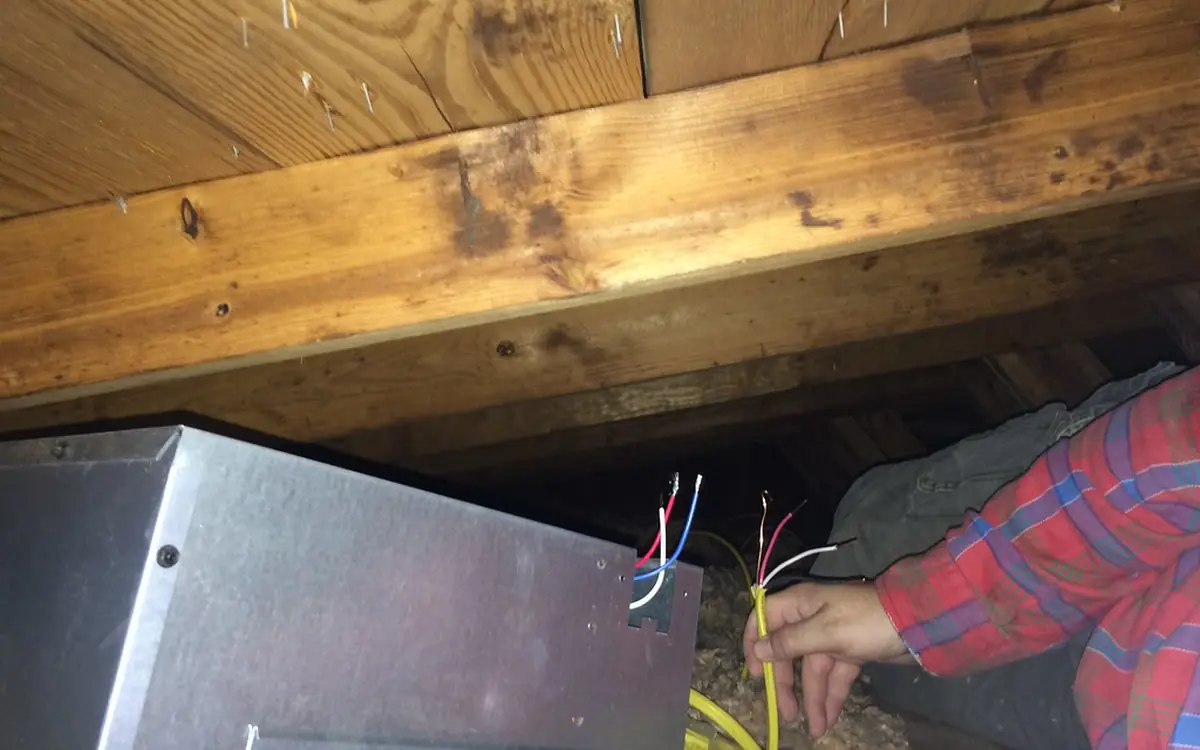
Planning a bathroom update or chasing a damp ceiling before winter? In North Idaho, it's worth checking where your bathroom fan sends the shower steam. A fan can make noise without having a working route outdoors, and a damp ceiling doesn't automatically mean your roof needs replacing.
Late fall is a practical time to sort this out, before snow makes outside access harder. You can learn a lot without stepping onto the roof.
- A bathroom exhaust fan needs its own duct to the outdoors, never an open end in the attic.
- A roof exhaust cap and an attic vent do different jobs. Attic vents don't make it okay to blow shower air into the attic.
- Check the fan from inside and the outlet from the ground. A working fan should hold a tissue against the grille.
- Ask who handles the duct, the wiring, and the weatherproof roof connection before work starts.
On this page
Is a Bathroom Fan Vent the Same as Attic Ventilation?
No. A bathroom exhaust fan pushes damp air through its own duct to an outlet outdoors. Attic ventilation lets outside air move through the attic. Having attic vents never makes it acceptable to send shower air into the attic.
The exhaust duct is the enclosed tube carrying damp bathroom air away. It ends at the termination, the outdoor outlet, usually a hooded cap on a wall or the roof. A damper is a flap that closes when the fan is off.
The Department of Energy's bathroom exhaust fan guide says to vent the fan outdoors, not into an attic, crawlspace, or the space between floors. Attic ventilation is its own system; our North Idaho roof ventilation guide explains how it works.
Why Check Your Bathroom Fan Before Winter?
Because warm, moist shower air crossing a cold attic can condense inside the duct. DOE recommends sealing the duct joints and insulating the duct to minimize condensation, and running it to the outside by the most direct route with as few bends as possible.
DOE's guide also says to use the duct diameter the fan manufacturer specifies and to support the duct so it hangs as straight as possible. It cites a capacity of at least 50 cubic feet per minute for a bathroom fan run intermittently. A bigger fan is not a substitute for fixing a disconnected or restricted duct.
Whether you're maintaining a home in Hayden, remodeling in Spirit Lake, or comparing houses around Rathdrum and Sandpoint, ask where each bathroom fan ends. On new construction, ask to see the route before the ceiling is closed.
How Can You Check Your Bathroom Fan Yourself?
Run it during every shower, see whether it holds a tissue against the grille, clean the cover with the power off, and look at the outside outlet from the ground. Keep a record of when dampness shows up.
- Run it during showers
EPA's homeowner moisture guide says to run the bathroom fan or open a window when showering. Persistent dampness is a reason to investigate, not a diagnosis by itself.
- Try the tissue test
DOE's guide notes that a bathroom fan should have enough suction to hold a tissue against the grille. If it can't, the fan, duct, or outlet needs a closer look.
- Clean the cover
With the power off, follow the manufacturer's cleaning directions. DOE notes that vacuuming the fan cover and blades can improve airflow. Don't reach into wiring or remove electrical parts.
- Look from the ground
If you can see the outlet, it should have a hood, a damper, and a screen that keeps out birds and pests, and it shouldn't be clogged. Binoculars help with a roof cap, but an unclear view isn't proof everything is fine.
- Keep a record
Photograph ceiling marks and note whether dampness follows showers, rain, or both. Share that pattern with your installer instead of guessing the cause.
Stay on the groundDon't climb onto a wet, icy, or snowy roof, and don't enter an attic without safe access and a solid surface to walk on. You can get a professional assessment without crawling through insulation.
When Should You Call a Professional?
If you can't find an outdoor outlet, the fan drips, a stain keeps coming back, or you suspect the duct is disconnected. Water near electrical equipment needs attention; leave the equipment alone.
EPA's guidance is to fix the water problem, not just clean or cover the stain, and to dry wet materials within 24 to 48 hours. It also warns against painting over moldy surfaces. Suspected hidden mold deserves a careful assessment rather than opening up materials yourself.
Who Fixes Which Part of a Bathroom Fan Vent?
A roofer handles the roof cap and the flashing around it. An HVAC contractor handles the fan and duct. An electrician handles any wiring changes. Ask who is responsible for each part before work starts.
Flashing is the weatherproof material where the vent meets the roof. Settling responsibilities up front keeps a job from ending with a new cap and the old duct still disconnected.
Lakeview's roof inspections are free and cover the roof side of the problem. If the cap or flashing needs work, see our roof repair service. Compare repair with roof replacement only if the inspection finds broader damage.
What Should a Bathroom Vent Repair Proposal Include?
The problem found, photos where practical, and a written scope that says whether the work covers the cap and flashing, the duct, insulation, or electrical changes, and how the installer will confirm air leaves the house and the damper works.
There's no fair single price for this without seeing the route and access. Compare proposals for the same complete scope, including any separate trades. If you're buying a home, ask for repair records and a clear description of any unresolved moisture problems.
Want a Second Look at the Roof Connection?
Tell us what you're seeing. Roof inspections are free, and there's no pressure to replace a roof that needs a smaller repair.
Frequently Asked Questions
Does every bathroom fan need a roof vent?
No. It needs an outlet outdoors, which may be through a wall or the roof. The route depends on the house and the fan instructions. Ask your installer to explain the complete route rather than assuming a roof cap is always best.
Can the bathroom fan discharge into the attic if the attic has vents?
No. Bathroom exhaust should go directly outdoors through its own duct. Attic ventilation is not a substitute for removing shower moisture at its source. Have a disconnected or attic-ending duct corrected by a qualified installer.
How can I tell if my bathroom fan is working?
Turn it on and hold a tissue against the grille. DOE's guide notes a bathroom fan should have enough suction to hold it. If it doesn't, have the fan, duct, and outdoor outlet checked.
Why does water drip from my bathroom fan?
Condensation in the duct is a possible cause, but the drip alone doesn't prove it. A roof leak or another water source needs to be ruled out. Leave wet electrical equipment alone and have the duct, outlet, and surrounding roof checked.
Should I cover the outside vent to keep cold air out?
No. Blocking the outlet stops the fan from removing moisture. Have a professional check the damper, the flap that closes when the fan is off, and the duct insulation instead.
Does a leaking roof vent mean I need a new roof?
Not necessarily. A problem at one cap or its flashing may be repairable. The decision depends on the surrounding roofing and whether moisture has spread. Ask for photos and an explanation before considering replacement.
About this guide. Written by Lakeview Roofing & Restoration, a family-owned roofing company in Rathdrum, Idaho, and an Owens Corning Preferred Contractor with HAAG certified inspectors. Facts in this guide were checked against the sources listed below.